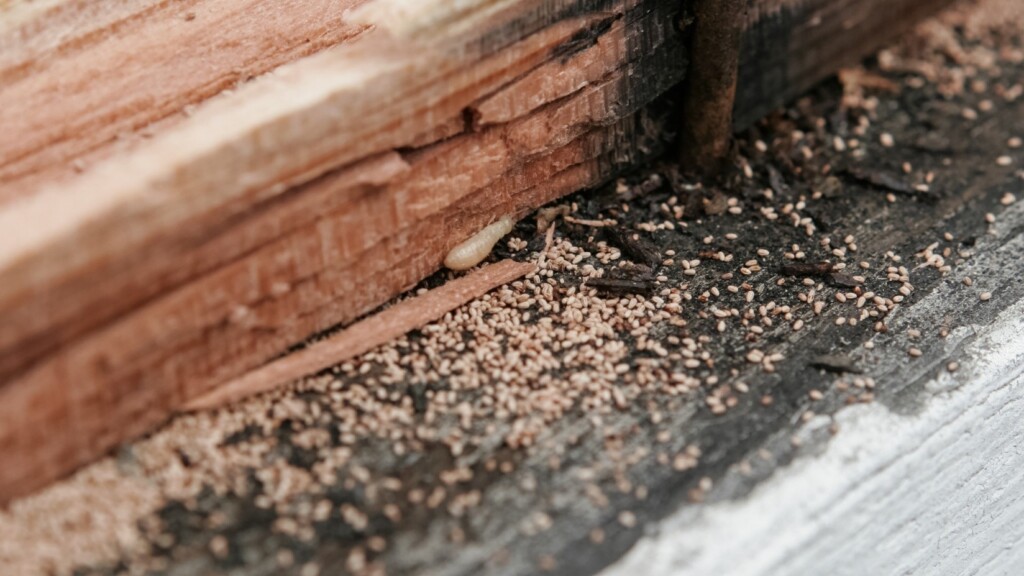
Termite control in Kansas City gets a lot more stressful the second someone finds damaged wood and realizes they have no clue whether they are looking at an old problem or a current one. That is the part that really gets people. If the trim feels soft, the baseboard looks chewed up, or the wood sounds hollow when you tap it, your brain usually jumps straight to worst-case mode.
The trouble is, termite damage can sit there for years after the insects are gone. On the other hand, active termites can keep working in hidden places long before the damage looks dramatic. So the answer is not always obvious from one glance at the wood.
That is why people get stuck in the middle. The damage looks bad enough to worry about, but not clear enough to tell the story by itself. Usually, the best approach is to stop asking the wood to answer everything on its own and start looking at the context around it.
What old termite damage usually looks like
Older termite damage often looks dry, settled, and a little stale. The wood may still be weak, but it does not always look freshly disturbed. Sometimes it has a worn or dusty look inside the damaged area. Sometimes there is old paint bubbling, a patched section, or a spot where the surface looks rough but nothing around it seems to be changing anymore.
That does not mean old damage is harmless. It can still leave the home needing repairs, and it can still raise questions about what happened before you owned the place or before the last work was done. But old damage often has a static quality to it. It feels like something that happened, not something that is still busy happening now.
A lot of homeowners end up calling a termite extermination company in Kansas City because they realize they are staring at damage without knowing whether they are looking at history or a fresh warning sign. That is a fair reason to call. This is not one of those issues where guessing tends to feel very satisfying.
What starts to make damage look more active
Fresh termite activity usually comes with a little more going on around the damage. Maybe the wood feels newly soft. Maybe a spot that seemed minor now looks bigger than it did before. Maybe there are mud tubes nearby, or an area that seems to be breaking down in a way that feels recent. Sometimes homeowners notice a piece of trim that suddenly gives way too easily, or paint that starts bubbling in a way that does not feel old and settled.
Moisture can make this harder to read, because wet wood already looks suspicious. Still, when you see damaged wood paired with moisture, soft spots, and newer-looking signs around the area, it starts making more sense to take the situation seriously. That is usually when termite control in Kansas City shifts from general concern to something that deserves a closer inspection.
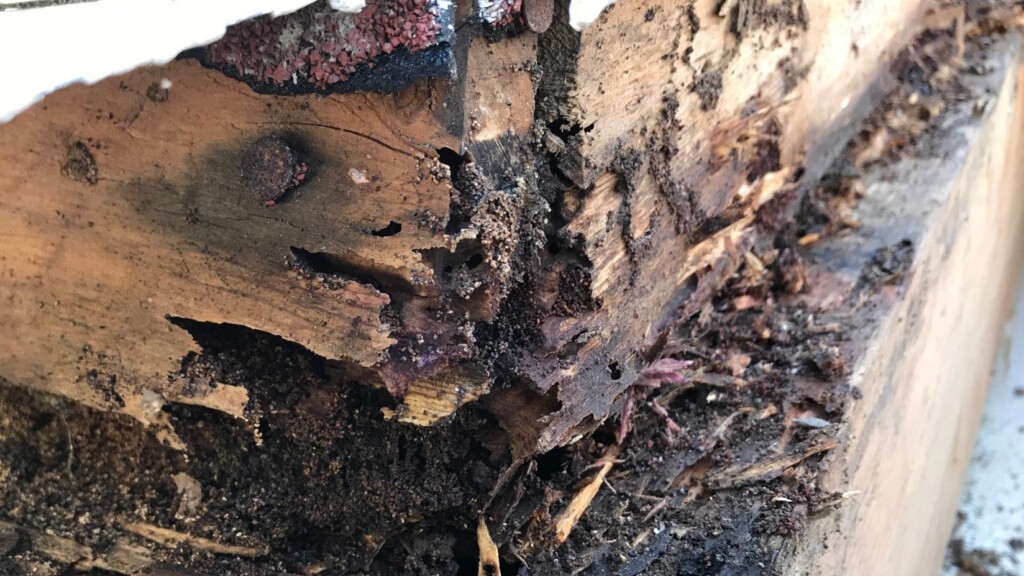
A good inspection usually tells you more than the damaged board does
This is where people get tripped up. They focus on the one piece of wood they can see and try to force that one spot to answer the whole question. Termites rarely work that neatly. The visible damage might be the least important part of the story, or just the first part you happened to notice.
A careful termite inspection in Kansas City looks past the obvious area and asks better questions. Is there fresh mud tubing? Is there moisture helping the conditions stay favorable? Is the wood-to-soil contact creating easy access? Does the surrounding area suggest the issue is contained or still active elsewhere? That broader look is usually what helps separate “this happened before” from “this may still be going on.”
The same goes for Kansas City termite inspection services that include good documentation. If someone can tell you what they are seeing, where they are seeing it, and how fresh it appears, the whole thing gets less murky fast.
Moisture is where the question gets messy
Honestly, moisture is what makes a lot of termite calls confusing. Damp wood can look bad all by itself. It can stain, soften, warp, and make paint lift. It can also invite termites or make old damage look more alarming than it really is. So if you are seeing suspicious wood in a spot with a leak, poor drainage, condensation, or a chronically damp crawl space, the picture gets blurrier.
That is one reason conversations about termite treatment in Kansas City often end up including home maintenance too. Even if the damage turns out to be old, the moisture still matters. And if the activity is current, that same moisture may be one of the reasons the area stayed attractive in the first place.
Change over time tells you a lot
If there is one thing homeowners can trust, it is change. A suspicious area that stays exactly the same for a long time may still need repair, but it does not necessarily point to active termites. A suspicious area that keeps getting softer, bigger, or more fragile is harder to brush off. Fresh-looking mud tubes, newly blistered paint, or damage spreading along nearby trim all deserve attention.
That is why termite control in Kansas City is often less about one dramatic discovery and more about patterns. People notice something, then notice it again, then realize it does not look quite the same as it did before. That pattern is usually more useful than a single photo or one nervous glance.
The safest answer is usually the boring one
Most homeowners want a quick way to tell old from active termite damage on their own. Sometimes the signs point pretty clearly one way or the other, but a lot of the time the honest answer is that the difference is not clean from the surface alone. Old damage can look scary. Active damage can stay subtle. That is why this question keeps coming up.
If you are trying to figure it out, the safest move is not to overreact, but not to talk yourself out of concern either. Get the suspicious area looked at, especially if moisture is involved or the damage seems to be changing. If it is old, great, now you know. If it is active, early termite control in Kansas City gives you a much better shot at straightforward termite removal in Kansas City before the repair side gets uglier.
FAQ
Can old termite damage still feel soft years later?
Yes. Damaged wood does not magically become strong again, so old areas can still feel weak even if termites are gone.
Do mud tubes always mean there are active termites right now?
Not always, but fresh-looking tubes are a solid reason to have the area checked.
What is the best way to know for sure?
A real inspection is still the most reliable answer when you are trying to sort out whether damage is old or whether termite control in Kansas City needs to happen now.
Ready to get started? Reach out to Smithereen online to fill out a form or call us at 317-279-6474. We help homeowners. We help businesses. We help people take back control from pests.
We listen. We inspect. We solve problems quickly, and we do it right the first time.

Need help now?
We’re Green Shield Certified to protect your home or facility with expert pest control that works.
Follow us on Facebook and LinkedIn for prevention tips, updates, and behind-the-scenes stories from the field.